Some people remember childhood through places. I remember mine through kitchens.
Growing up, the steady presence in my life came not from my parents, but from my grandparents. In a world that often felt uncertain, they became my safety and my anchor. In particular, my two grandfathers — my Dadaji and my Nana — shaped who I am, in ways I am still discovering.
When I think of my Nana-Nani’s home, I remember it through food. My Nani was a phenomenal cook, and I eagerly awaited summer vacations when I could eat her food for days on end. But what surprised and delighted me was that my Nana was an even better cook! So was my Dadaji. Long before I had the language for feminism, watching these men cook, care, and nourish felt quietly radical. They showed me that care was not gendered, it was human.
Some of my strongest memories live in those meals. My Nana teaching me how to make what I fondly called “yummy bread,” still one of my greatest comfort foods. My Dadaji’s unforgettable mutton keema. Food, in their homes, was never just sustenance; it was memory, love, and culture. It connected me deeply to my white-makhan-loving Punjabi heritage, one I carry with pride.
These were men shaped by history. My Dadaji lived through the Partition; arriving in India from Bahawalpur in Pakistan in 1947 and, in a matter of days, transforming from a wealthy orchard owner into a refugee. Both my grandfathers embodied a generation that valued kindness, learning, and quiet resilience. They were well-read and erudite, spoke multiple languages, loved their wives deeply, and introduced me to music, shayari, literature and of course, food.
My Nana, especially, was a living breathing example of the everyday generosity. He set aside one day every other week to sit by the telephone and call friends, family members, and relatives simply to ask how they were doing. Few returned the gesture, but that never stopped him. His home had an unspoken rule: no one needed to announce their arrival. People dropped in when they wished, stayed as long as they liked, and were always fed generously. From him, I learned a core tenet of Punjabi culture — you never cook only for yourself. You always make a little extra for someone who might drop by.
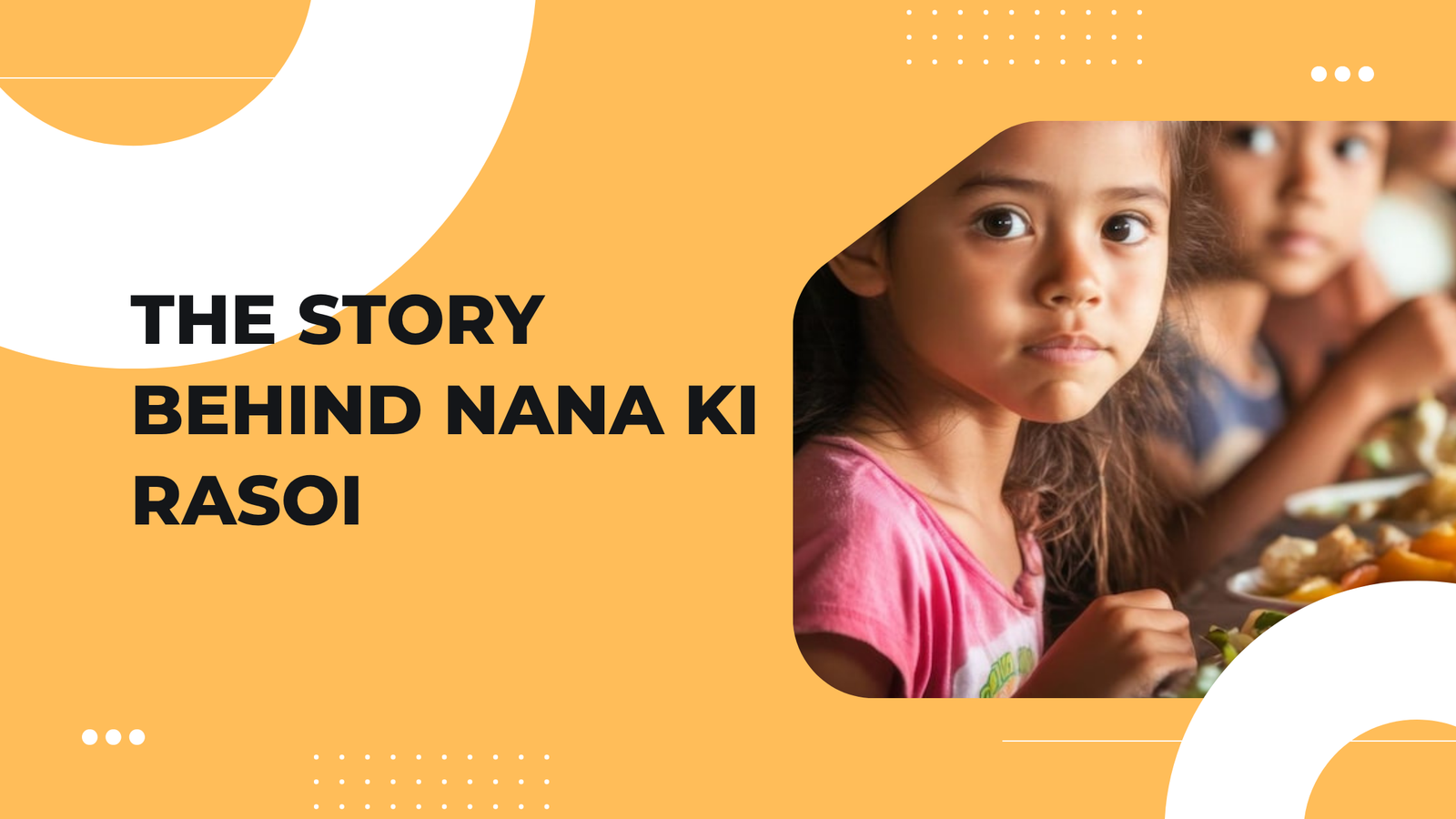
When my Nana passed away in February 2020, I struggled to come to terms with his absence. For years, I kept asking myself how to honour a man whose life had been defined by quiet generosity rather than grand gestures. I wasn’t ready to let his legacy fade into the annals of the family history. One day, the answer became clear. The fire in my Nana’s hearth did not need to go out. His rasoi — a place of warmth, care, and abundance — could continue to flourish. ‘Nana Ki Rasoi’ is my way of carrying that spirit forward; feeding neighbours, communities, and strangers with the same generosity he practiced every day. It is not just about meals. It is about making space. It is about making enough for one more person. It is about ensuring that no one eats alone. This is how I remember my Nana. And this is how his legacy lives on.
Dr. Samira Verma
Founder and Director, Nana Ki Rasoi
upload News: Suffering & Difficulties in Life through Faith

The Story Behind Nana Ki Rasoi
 anujkmrgupta0803@gmail.com
Leave A Comment